A Complete Guide to Opening a Hospital Pharmacy in India
Introduction
Opening a hospital pharmacy in India is an exciting yet highly regulated process. Hospitals cannot afford delays or compliance errors because pharmacy operations impact both revenue and patient care outcomes. Whether you’re building a new hospital or expanding an existing unit, understanding the step-by-step process is crucial.
This hospital pharmacy startup guide offers a complete breakdown of legal requirements, infrastructure norms, manpower needs, and best practices for 2026. With evolving regulations and stricter audits, following the right procedure ensures smooth & timely approval.
Understanding Hospital Pharmacy Requirements in India
To open a hospital pharmacy, hospitals must meet specific structural, operational, and legal standards. Key requirements include:
- Minimum area (usually 10–15 sq. meters depending on state rules)
- Clear division between store & dispensing area
- Air-conditioning as required for certain medicines
- Refrigerator with temperature logs
- Adequate lighting & storage racks
- Fire safety compliance
These pharmacy infrastructure standards are essential before applying for the Drug License.
2. The Pharmacy Licensing Process in India
To start operations, hospitals must complete multiple licenses and documentation procedures:
Drug License (DL)
Issued by State Drug Authority under the Drugs & Cosmetics Act.
Food License (FL)
Required if you store or sell nutraceutical products.
GST Registration
Mandatory for billing & financial compliance.
The pharmacy licensing process in India includes:
- Preparing required documents
- Ensuring premises meet D&C rules
- Applying online via state portal
- Undergoing site inspection
Receiving final approval
3. DL and FL Registration Requirements
Documentation varies by state but generally includes:
- Pharmacy layout plan
- Ownership/lease proof
- Pharmacist qualification certificates
- Refrigerator purchase bill
- Fire NOC
- Partnership/MOA documents (if applicable)
Expert support helps prevent delays and rejections during DL and FL registration.
4. CDSCO Compliance Requirements
Hospitals must also ensure CDSCO compliance, especially when handling:
- Schedule H drugs
- Schedule X drugs
- Narcotic medicines
- Sample medications from pharma companies
All medicines must be tracked with proper documentation and logs.
5. Staffing Requirements for Hospital Pharmacies
A qualified registered pharmacist must be present during operating hours. Hospitals typically require:
- 1–2 pharmacists per shift
- Pharmacy assistants
- Stock controller
Billing & cash desk staff
6. Designing Infrastructure for Efficiency
A well-planned layout ensures smooth workflow. Include:
- Separate OPD and IPD counters
- Storage racks designed by category
- Cold storage zone
- Secure controlled-drug cabinet
- Billing counter with POS system
Efficient design improves productivity and reduces errors.
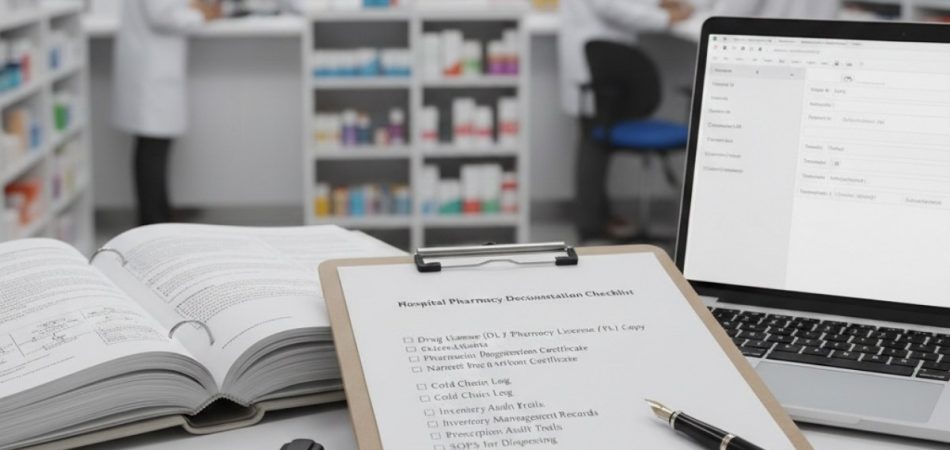
7. Hospital Pharmacy Documentation Checklist
A thorough hospital pharmacy documentation process ensures readiness for inspection.
Checklist includes:
- Purchase register
- Sales register
- Stock ledger
- Temperature logs
- Expiry and damage register
- Schedule drug records
Regular upkeep prevents compliance issues.
8. Final Steps Before Opening
Before opening day:
- Complete trial run
- Enter initial stock
- Validate barcode scanning & billing
- Conduct internal audit
- Train staff in SOPs
These steps ensure smooth functioning from day one.
Conclusion
Opening a hospital pharmacy in India requires proper planning, licensing accuracy, and compliance discipline. With the right guidance, hospitals can reduce delays and operate efficiently while ensuring safe medication dispensing. Following this hospital pharmacy startup guide ensures that your pharmacy begins operations smoothly and sustainably.
Sources & Further Reading
India’s Drug Licensing Guidelines — Central Drugs Standard Control Organization click here